


Begin Your Career in Healthcare
Buffalo State is a great place to begin your career journey in medicine, dentistry, and other healthcare fields. We offer flexible degree programs that can be tailored to your specific health-career goals and provide ample opportunities for hands-on learning, professional internships, and undergraduate research experiences.
-
Work with your advisor to choose other General Education courses or choose a minor and take courses in that minor. You can look ahead to see what other courses are needed and take one of those as well. Just pay close attention to required pre-requisites!
-
Career and Professional Education (CAPE) at Buffalo State is an amazing resource for investigating career options. You can make an appointment to see any of the CAPE counselors or visit Cleveland Hall 306.
-
For general course advisement, please see your professional or academic advisor (they are found in your Navigate360 Success Network.) Advisors can help you figure out your course needs for your major and guide you on what pre-health courses will fit in that schedule. If you have specific questions about health-based careers you can email prehealth@buffalostate.edu, stop by to see Shannon Casterline in SAMC337, or contact Cate Vivacqua in CAPE which is located in Cleveland Hall 306.
Alumni Spotlight
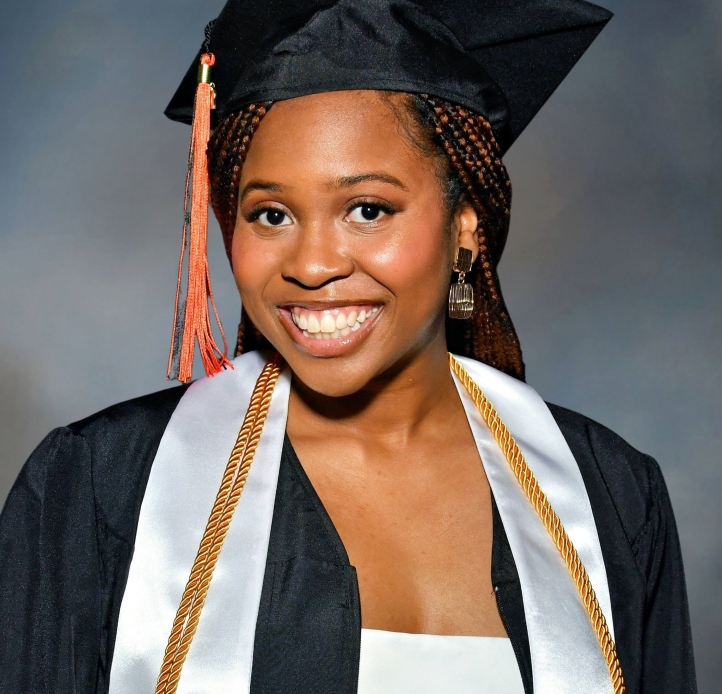
Jelyse Williams, '25
Jelyse graduated in December 2025 with a B.S. in Individualized Studies and a Biology minor. She recently started a graduate program as a Predoctoral Fellow / Nutritional Sciences PhD Student at The University of Illinois Urbana-Champaign Graduate College Equity Doctoral Fellowship.
Tell us a little bit about yourself:
After graduating, I applied to graduate school and got accepted into the University of Illinois Urbana-Champaign for a Nutritional Sciences PhD program, and I have joined them for their Summer Predoctoral Institute, an 8-week transition program offering research experience, oral presentation skills development, and academic career development.
Tell us about how your experience at Buffalo State:
I met a former Buffalo State alumnus, Dr. Raven Baxter, right as I was taking a semester off from my prior school due to an injury. After networking and getting to know each other, she agreed to be my mentor. Afterwards, she suggested that I transfer to Buffalo State; this was the best decision I could've made for myself. I went from being unmotivated with a 2.6 GPA to being invested in my community, my work, interested in creating change, and ending up with a 3.98 GPA.
It was a complete turnaround and gave me the blank slate and warm environment I needed to achieve various feats like publishing my own book (Rain on Me), creating my own undergraduate thesis, tabling several times, and publishing in the Spring 2025 Portrait Literary Magazine.
Buffalo State Highlights:
1. The faculty and staff were so kind and accommodating. Coming in as a transfer student was daunting after a previous poor experience; however, both faculty and staff gave me a warm welcome, giving me a warm and sociable environment in which I could flourish academically, creatively, and socially. I would like to especially highlight Professor Tamara Rabe, Irene Sipos, Matthew Fincel, and Samantha Kowalski(from the writing center), Dr. Keith Fulcher, Dr. Martha Skerrett, and the entire food staff.
2. The events and clubs made school worth going to. On difficult days, seeing a table representing an opportunity, food, or a club would spark my curiosity, offering a welcome distraction and a way to ease my mind.
3. The career opportunities, academic support, and mental health resources were in abundance, providing me with easy access to opportunities I otherwise wouldn't have known about or been able to pursue. Specifically, I utilized resources such as Upward Bound, the CAPE center, the academic writing center, the counseling center, the librarians, and ALLsearch.
What piece of advice would you give to a pre-health student at Buffalo State:
Understand that your community is important; school would not be the same without the members around you working to make it happen, so take the time to acknowledge the good around you and be kind to others.
Remember to take breaks and take the time to explore different clubs, foods, and activities. These are great ways to get to know who you are.
Ask to join another student's table, compliment others, listen to understand, not to respond, and be kind without expecting anything back. This is how you create long-lasting bonds.
Share your story with us!
We would love to hear from our former Pre-Health students. Please reach out and share where you are now and what you are doing.
Add Yourself As a Pre-Health Student
Talk to us!